Indians have largely been known to be patient people. Be it patience with foreign dictators/rulers, faltering governments, insufficient food and water supplies, religious agendas, inflation or any other problems that have plagued the Indian sub-continent in the last few centuries. With each century, the rulers or governments have changed and promises of growth and equitable governance have seen too many fluctuations. For the first time since the last few decades of governance, Modi became the leader who did not use religion as propaganda, rather he chose the higher path of clear and clean governance. With this call for development and after a decade of watching the weak-willed UPA bungle around with the motions, Indians came out in huge numbers to show a change in their limit of endurance. With a loud development agenda, backed by his case study of Gujarat, Modi came out as a clear winner.
Looking at Modi’s career, the RSS was a major part of his journey and Hindutva ruled the roost for over four decades. It was during his second term as the Gujarat Chief Minister (2002-2007) that Modi moved from his earlier core beliefs of Hindutva and adopted economic development as his brandishing banner. This change marked a paradigm shift in his policies and his distance from religion influenced agendas. Modi could not always shake off the Hindutva baggage of his past, but it was his strides in this development agenda that lead Modi to the seat, right in the center of the country as the 15th Prime Minister.
Nine months into his tenure, Modi finds that his core values and his adopted values are in a face off. The Hindutva lobby sees Modi as its own man as it spent a decade defending him from attacks of secular liberals in the aftermath of the Gujarat riots. Also, it was because the parivar’s hard Hindutva core and saffron activists campaigning for him against the opposition of older leaders like LK Advani that led to his stunning victory. But the brazen display of power by the Hindutva wing has many people cringing. Be it the attempts to ‘reconvert Christians and Muslims, the authority to act against Muslim actors who star in films that caricature elements of the Hindu faith, or statements like “Those who do not approve of the victory of Hindutva forces can go to Pakistan’, as one BJP leader has said.
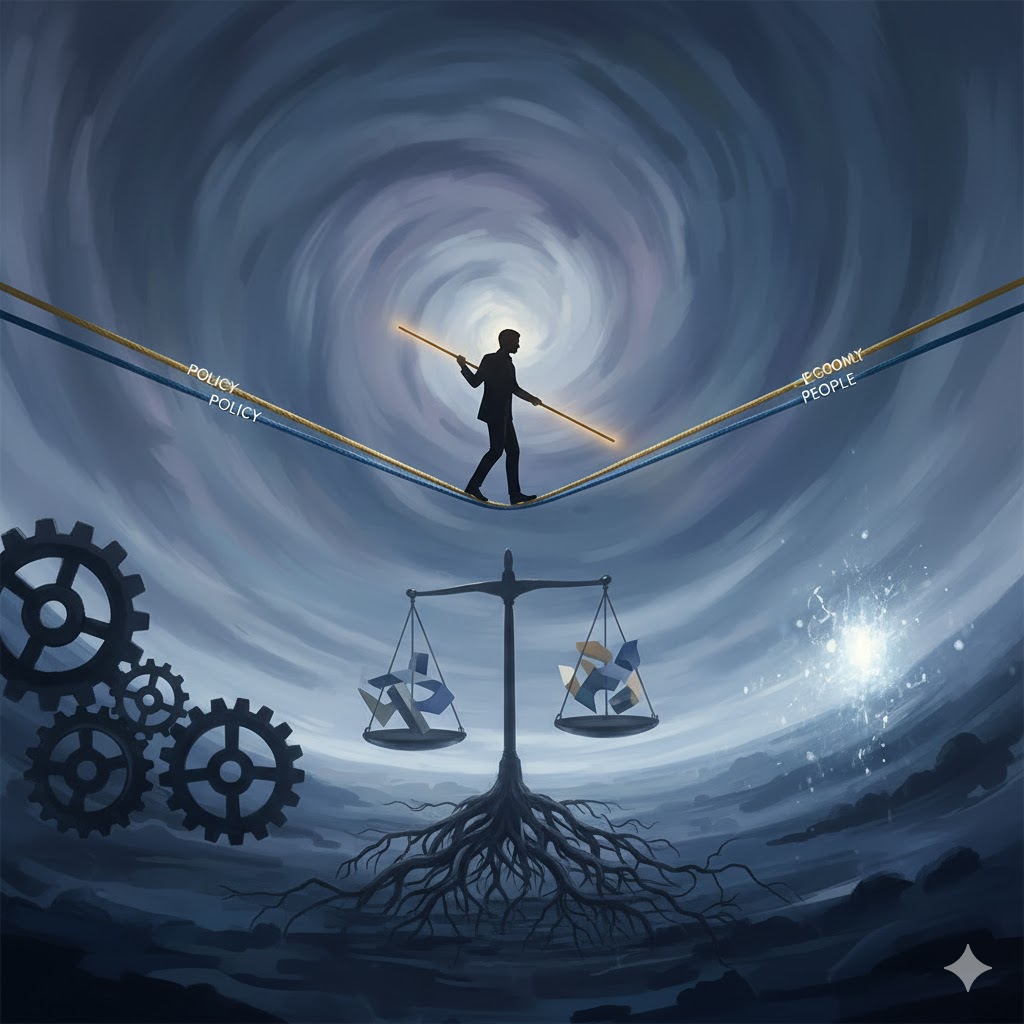
Modi now finds himself at the crossroads of his past and present. Just like organizations in their development cycle move from the core values and take on additional adopted values, the juggernaut of Modi’s career is now in conflict with the same. When looking at organizations in the corporate world, companies in their moments of conflict debate about being retrospective or forward thinking. However, they are not faced with having to go to re-elections every five years and being forward thinking usually tends to add to the bottom line in the future. So how will Modi manage this crucial crisis of Human Resources under his nose? On one side, stand his early Hindutva supporters and on the other are his majority of recent supporters to his development campaign. The political implications of taking sides in this decision may be huge, but it all boils down to the basic problem of human resources in the end and how a manager manages different expectations of his team members. This is one decision that the whole country will watch and learn from and knowing Modi, ‘the master strategist’ this will be a very interesting learning indeed.

Author: Ankita Sharma
About the Author:
Ankita Sharma Sukhwani is currently Senior Associate – Content and feature writer at People Matters magazine. She has always been a journalist, covering different industries during her professional career. Reach her at [email protected]