
Wage security is one of the three major problems faced by the Indian workers; the others being employment security and social security. Rate of wage or income of the citizens is the factor to identify a country as poor or rich. It is very distressing to note the raging controversy among the Planning Commission of India, the Government of India and the sociologists on what constitutes poverty line. Currently, the workers that are not covered under the existing labour laws related to job security, wage/income/ remuneration security and social security are termed as unorganized workers. Such workers are estimated to be 97% of the total workforce, i.e. 48 crores.
Concept of minimum Wages
Commencing from the year 1928, ILO adopted Conventions and Recommendations concerning Minimum Wages. In the series, Convention 131 of 1970 and Recommendation 135 of 1970 were the latest. Among others, ILO Conventions envisage the following criteria, for determining the level of minimum wages. (a) In respect of social aspect, the minimum wages should be adequate to fulfill the needs of workers and their families’ vis-à-vis the relative living standards of other social groups, the general level of wages in the country, the cost of living and variables thereof and level of social security benefits. (b) On the other, the economic factors include the requirements of economic development, levels of productivity and desirability of attaining and maintaining a high level of employment.
In India, the minimum wage is a wage that is somewhat intermediate to a wage which is just sufficient for bare sustenance, and a fair wage. The minimum wage includes not only the wage sufficient to meet the bare sustenance of an employee and his family, but also expenses necessary for his other primary needs such as medical assistance and education of her children etc. The concept of minimum wage is dynamic and is likely to undergo change along with the standard of living. Therefore, its concomitants must necessarily increase with the progress of the society.
The Constitution of India, inter alia, has solemnly resolved to secure economic justice to the people of India. Art. 43 laid down that the “State shall endeavour to secure, by suitable legislation or economic organism or any other way, to all workers, agricultural, industrial or otherwise, work, a living wage, conditions of work ensuring a decent standard of life and full enjoyment of leisure and social and cultural opportunities.” A ‘socialist’ frame work to enable the working people a decent standard of life, has further been promised by 42nd Amendment.
A good deal of discussion could be found at various fora, including the Fair wages Committee, on what constitutes ‘subsistence wage’, ‘minimum wage’, ‘fair wage’ and ‘living wage’. With the advent of development of socio-economic culture and the concept of social justice the basic features of wages have undergone progressive change. The minimum wages should lead, progressively to reach the ‘living wage’ as enshrined in our Constitution.
The issue of statuary wage fixing machinery was discussed by the 3rd Indian Labour Conference in 1943 and further by the subsequent meetings. The 15th Indian Labour Conference, at its meeting in 1957, declared that minimum wage is ‘need based wage,’ and should ensure the minimum human needs of industrial worker, irrespective of any other consideration and recommended that the following should be taken into account, while computing minimum wage rate.
(1) The family of wage earner be treated as of 3 consumption units and the earnings of family members and children etc. should be discarded. (ii) As per Dr. Aykroyd norms, the minimum food requirements should consist of 2700 calories per average Indian adult. (iii) Clothing requirements @ of 24 yards per annum per member. (iv) Rent corresponding to the minimum area provided for under Government’s Industrial Housing Scheme. (v) Fuel, Lighting and other miscellaneous items of expenditure to constitute 20% of the total minimum wage.
The Supreme Court of India, during 1992, in the case of Reptakos Bret and Co., while approving the above five minimum wage components of 15th ILC held that ‘the worker’s wage is no longer a contract between an employer and employee. It has the force of collective bargaining under Labour Laws. Each category of the wage structure has to be tested at the anvil of social justice which is the live-fiber of our society today’. Keeping in view the socio economic aspect of the wage structure the Supreme Court added sixth component towards requirements of (a) children education, (b) medical requirement, (c) minimum recreation including festivals/ceremonies and (d) provision for old age, marriage etc. which should constitute a sum of 25% to minimum wage. The Supreme Court further held that “The wage structure which approximately answers the above six components is nothing more than a minimum wage of subsistence level. The employees are entitled to the minimum wage at all times and under all circumstances. An employer who cannot pay the minimum wage has no right to engage labour and no justification to run the industry.
Generally, while arriving at a negotiated wage settlement, two aspects are considered, viz., the workers needs and the paying capacity of the establishment. Basing on the above stated norms, the V Central Pay Commission arrived at 6000 as minimum basic wages for an unskilled worker. Considering the paying capacity of the establishment recommended 4500 and the same was implemented from January, 1996. Accordingly, the VI Central Pay Commission recommended 7000 and the same was implemented from January, 2006. Besides basic wage, VDA (Variable Dearness Allowance) is paid as a protection against erosion of wage due to rise in prices, which is 113% from January, 2015. The Minimum Wage for unskilled employees of Central Government is 15,000.
The 2nd National Commission on Labour, June, 2002 (vide para 6.112) stated that the minimum wage should be such as would satisfy the needs of the worker and his family as per the norms of 15th ILC, which was further supplemented by the judgment of Supreme Court in the case of Reptakos Bret & Co. Further, the 2nd NCL, (vide para 12.247) agreed with the method and computation of minimum wage rate by the V Central Pay Commission and expressed that this should be the minimum wage rate even for worker in the unorganised sector.
In September, 2002, a Working Group was set up under the Minimum Wages Act, 1948 to go into codification of the concept of minimum wage, to list out guidelines’ base on critical evaluation of various parameters and also to study the problems in implementation of minimum wages. The Working Group, submitted report, which was accepted by the Minimum Wages Advisory Board, a Statutory Body under the M.W. Act, in its meeting held on 19-12-2003. Accordingly, a recommendation was made to the Government of India. No further action seems to have been taken in the matter by the Government. There is no end to the sufferings of workers.
The NCEUS (National Commission on Enterprises in the Unorganised Sector) has examined all aspects of the entrepreneur and the worker in the unorganised sector. In its report of 2007-08 contained in “The Challenges of Employment in India, Vol. I, para 7.46, page 178, stated that the minimum wage rates in the unorganized sector should be need based on the lines of 15th ILC norms.
The minimum wage rates are being fixed by the Central Government and also by various State Governments under the M.W. Act. In addition, the Government of India has been notifying the National Floor Level Minimum Wage from time to time. This is to indicate that the wage rate of any workers of any calling at any place should not be less than the National Floor Level Minimum Wage. The rate was 80 from September, 2007, 100 from November, 2009 and 115 from April, 2011. The rates of food items had increased by 200% during the period, but the Government of India was pleased to raise the National Floor Level Minimum Wage rate by 15% only. Can the worker survive?
The Minimum Wages Act, 1948 the first legislation on the vital issue of wages was initiated in 1946 by the then alien British imperialistic Government. The Act provided mechanism for wage fixation and enforcement. The British follow private capitalism and have no faith in social justice. True to their economic thinking and SHYLAKIAN MIND, the norms for wage rate fixation were not provided in the M. W. ACT. In the circumstances, the minimum wage rates are being fixed in a haphazard manner, which is a paltry 5000 to 6000. The Government, time and again, stated that ‘the Minimum Wages Act, 1948 has not laid down any norms/criteria for fixation of minimum wages. Hence, the norms recommended by the 15th ILC and improved by the Supreme Court in 1992 are taken into account by the appropriate Governments while fixing or revising minimum wages’. But, this appears to be not true, going by the rates recommended by V and VI Central Pay Commissions basing on the norms of 15th ILC and the paying capacity of the employer as detailed in para 3.4. The hollowness of the Government is exposed.
The 44th ILC on 14-15th February 2012 deliberated on this major issue of minimum wages and reiterated the norms laid down by the 15th ILC for fixation of minimum wage. Also welcomed the addition of sixth component by the Supreme Court in the judgment of 1992 in the case of Reptakos Bret & Co. for fixation of minimum wage and recommended to the Government to amend the M.W. Act. Other decisions include payment of variable D.A. along with Minimum wages; same and similar wage rates for workers in Central, State and private spheres, across various States and Regions; extending the coverage of the M.W. Act to all workers irrespective of whether included in the Schedule of the Act or not.
Unfortunately, norms for wage rate fixation were not included in the M.W. Act during the 60 tears of Independence. The Constitutional mandate, the Recommendation of 15th ILC as improved by the Supreme Court and the Recommendation of the Minimum Wages Advisory Board have not found favor with the Government nor considered at the negation table by the employers.
The launching of LPG (Liberalization Privatization and Globalization) from 1991 changed the mindset of the Rulers and employers. Their stress was on the survival of industry and achievement of growth, measured by rise in GDP figures and bidding at Stock Markets. The Contract Labour (Regulation and Abolition) Act, 1970 has linked the contract labour wage to the ‘poverty rates’ fixed under the Minimum Wages Act. Hence the employers, whether private organisations or the Government, across all sectors of ownerships and products, goods and services are prompted to adopt contract labour system in place of regular employment and make savings on the workers wage bill. The Government is not lagging behind in this competition of exploitation. Even where the enterprise is making huge profits and became NAVARATNA; worker is paid as per the ‘poverty rates’ of M.W. Act. While the private entrepreneur is joining the international club of trillioniers and the Public Sector Enterprise is securing the status of Maha-Navartna, Navaratna, Mini-Navaratna, the worker is pushed to the poverty line, and is living in sub-human conditions. The Government abdicated its constitutional responsibilities as well as authority to ensure equitable distribution of wealth among the employer and employee. Its behaviour is like that of the three monkeys of Mahatma Gandhi.
The launch of LPG 1991 changed the mindset of the Rulers and employers. Their stress was on the survival of industry and achievement of growth, measured by rise in GDP figures and bidding at Stock Markets. The wellbeing of the worker, the producer of the wealth, has been subjected to such negligence. The welfare of the workers has taken a further beating following the economic meltdown that emanated from the Wall Street, US, about six years ago and the subsequent economic crises of European Union. The Indian society is battered and the social outlook has been the victim. In the result, there is marked increase in the numbers and the riches of the rich and the numbers of the poor and the extent of poverty. Sociologists have described this situation as ‘the divide between the two Indias’.
Even the Judiciary is not out of this phobia, noted the Supreme Court of India, in its Judgment by a Division Bench, delivered on 5th January, 2010 in the appeal filed by Sri Harjinder Singh, a retrenched worker against the employer, the Punjab Stare Warehousing Corporation. The Courts’ including the last Court in the largest Democracy of the World’ have lost sympathy for the common man in pursuit of the ‘attractive mantras” of globalization and liberalization. The two Judges in separate Orders cautioned the Supreme Court and Constitutional Courts that ‘precarious consequences’ will visit the Nation if they dilute Constitutional imperatives to promote the ‘so called trends of globalization’. The Judges observed how they have noticed a ‘visible shift’ generally in the Courts’ approach in dealing with cases involving the interpretation of social welfare legislations like the Industrial Disputes Act’. “The attractive mantras of globalization and liberalization are faster becoming the raison d’être of the judicial process and an impression has been created that the constitutional courts are no longer sympathetic towards the plight of industrial and unorganized workers.’
in conclusion, I will quote what the bench said: ‘Our Constitution is primarily shaped and molded for the common man. It takes no account of the ‘portly presence of the potentates, goodly in girth’. (‘Dignified presence of Ruler, in handsome girth’) It is a Constitution not meant for ruler, but the ranker, the tramp on the road, the slave, the man with too weighty a burden, too weary a load’ The ‘ditches’ created in the society by the advance of globalization can only be overcome if ‘this Court makes an effort to protect the rights of the weaker sections of the society as ser the Constitutional mandate’. Judges and specifically the judges of the highest courts have a vital role to ensure that the promise (to secure all citizens justice, liberty, equality and fraternity) is fulfilled. If judges fail to discharge their duty, they fail to uphold and abide by the Constitution which is their oath and office…. Judges of the last court in the largest democracy of the world have a duty to articulate the Constitutional goal.’
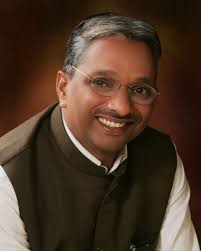
Author: Virjesh Upadhyay
Author Information: Virjesh Upadhyay is the All India General Secretary of the Bhartiya Mazdoor Sangh (BMS).