
Of course. Here is the next article from the magazine.
A Challenging and Meaningful Job -Being a School Principal
By Vijay Shukla
When the editorial board of TISS approached me to write about an article for their prestigious magazine, Kaustubham, on leadership, I requested them if I could write about leadership at schools. I was glad to receive their instant approval of the topic.
A. India’s K12 System – a big challenge
India has one of the largest K12 systems in the world with about 300 million students going to school with over 1.4 million schools out of which 1.1 million are government school and approximately 0.3 million private schools. Hence, there are at least 1.4 million school leaders in India with many of them being school principals. Unfortunately, the school system in India is notorious for poor quality and there are several social, political and cultural reasons behind it. If one must identify one factor to improve quality of school education, it is the quality of School Leader/Principal.
B. Successful Principal = Successful School
Leadership at schools is a critical area that has not received as much attention as it deserves. At the centre of a successful school is the successful school principal. However, the challenges faced by and competencies needed for a school principal are unique in nature. The role of a school principal is so critical that it can potentially make or break a school. There have been several studies that suggest a strong link between school principal capabilities and school success.
C. Primary Responsibility of a School Principal
The primary responsibility of a school principal is to provide leadership and administration and motivate instructional and support personnel to strive for superior performance to provide the best possible opportunities for student growth and development, both educationally and personally. Typically, a school principal leads all the teachers, students and the administrative staff of the school and manages external stakeholders such as parents, community and statutory and legal agencies.
A typical day of a school Principal Being a school principal means being on one’s toes – all the time. Let me share how a typical school day for a school principal appears:
- 7:00 AM Reach the school and attend the morning huddle
- 8:00 AM – Attend assembly and make amendments in the plan for the day for teaching and non-teaching staff
- 8:30 AM Meet parents (listen to their issues and address them as much as reasonably possible)
- 9:30 AM – Make a round of the school (walkabout) to ensure the school is operating well; attend to issues needing attention
- 10:30 AM Attend to issues related to teachers and manage any change, as needed.
- 11:30 AM Conduct a classroom observation and feedback session
- 01:00 PM Attend to emails and return phone calls
- 01:30 PM – Lunch
- 02:00 PM Another classroom observation and feedback session
- 03:30 PM Another round of the school (walkabout)
- 04:00 PM preparation for special events (like science exhibitions, cultural festivals or sports meet)
It must be noted that the above does not consider the myriad tasks and requests by teachers, students, parents, regulatory and statutory for certain ‘urgent’ activities.
D. Expectations from a school Principal
There are many expectations from a school principal in terms of his/her deliverables. The major deliverables for a school principal are:
- Shaping a vision of leadership development and academic success for all students
- Creating a climate conducive to education
- Cultivating leadership in students and staff
- Managing people, data and processes
Wide range of Responsibility As one can infer from a typical day and expectations from a school principal, there is a wide range of responsibility on the principal’s shoulders. The key areas of responsibility for a school principal are:
- School Development
- Strategic management of the school
- Ethical and motivational leadership to the teaching and non-teaching staff at the school
- Development and implementation of school admission, fee, curriculum and other policies
- Professional, internal and external relations with the board, teaching and non-teaching staff, students and parents of the local community
- Ensuring professional development of teachers through regular assessment and monitoring
- On-going development of teachers through lesson observations, regular use of data, collaborative planning and enquires, coaching and mentoring
- Development and implementation of teacher development programs
- Learning and Teaching
- Ensuring high levels of student achievement and learning through rigorous and engaging classes
- Implementation of curriculum programs adopted for the school
- Development and implementation of special programs for students who are less responsive to the teaching methodologies adopted in the classes
- Development and implementation of extra-curricular enrichment program that provide high-quality offerings in sports, arts, music and other similar activities
- School Culture and Behaviour
- Maintenance of discipline and enhancement of school culture
- Ensure uniform policy and appearance policy for students
- Alignment of students, teachers, staff, and parents around the school’s values and approach
- Implementation of consistent methodologies for managing students with the most challenging behaviours in a non-deterring and therapeutic manner that does not allow disruption of the norms of the school and the learning of other students
- Maintaining partnerships with external organizations that enrich the culture of the school through service opportunities, life and cultural experiences, educational and support programs, and other resources
- Management and development of people, systems, and resources
- Talent Management
- Financial management
- Operational management
- Maintenance of community relations
E. Competencies & Characteristics of a Principal
A school principal needs to possess a bunch of competencies and abilities: A school principal needs to be someone with significant number of years of teaching experience, adequate administrative experience, ability to monitor and develop teachers, good at managing expectations of parent community, ensure legal and regulatory compliance, run the school in financially self-sustainable mode and above all, be great at design and delivery of quality education – in short, a perfect leader. In fact, a great school principal needs to have all such competencies and still work like a great music conductor of an orchestra. She/he needs to lead several teachers (or musicians) delivering performances in different contexts. Each subject teacher is different and each student has different needs a successful school principal needs to ensure that the teachers are utilized well enough to meet the needs of students.
The findings of the study by Notman and Henry (2011) in New Zealand indicate that successful principal leaders had good mastery of the following seven leadership capacities: management, communication, consultation, knowing when to lead, decision making, critical reflection and interpersonal connectedness with members of the school community.
- They have consistent, high expectations and are very ambitious for the success of their pupils.
- They constantly demonstrate that disadvantage need not be a barrier to achievement.
- They focus relentlessly on improving teaching and learning with very effective professional development of all staff.
- They are experts at assessment and the tracking of pupil progress with appropriate support and intervention based upon a detailed knowledge of individual pupils.
- They are highly inclusive, having complete regard for the progress and personal development of every pupil.
- They develop individual students through promoting rich opportunities for learning both within and out of the classroom.
- They cultivate a range of partnerships particularly with parents, business and the community to support pupil learning and progress.
- They are robust and rigorous in terms of self-evaluation and data analysis with clear strategies for improvement.
F. Major Challenges for a Principal
- #1: Too much to do and too little time Given the complexity of operations of any school, the school principal needs to be adept at managing practically every second of the time available. Assuming a school principal works for 8 hours in a day and that the school has about 80 teachers, even if 50% of the principal’s time goes in monitoring and developing teachers, each teacher gets about 3 minutes per day! Thus, it is critical that a successful school principal has excellent time management skills and establishes leadership by demonstration.
- #2: No one-size-fits-all solution availableHaving said that, there is no one-style-fits-all in terms of ideal leadership approach for a successful school principal. School Principal’s leadership style is a function of a variety of factors and such factors can be classified into 3 categories: 1. Global factors; 2. School factors and 3. Personal factors. A few key sub-factors that the school principals must be mindful of to arrive at the ideal leadership approach are mentioned below:
- Global factors
- Demography (the kind of socio-economic and psychographic strata students are enrolled).
- Economy (the state of economy of the community)
- School leaders’ resource potential (resources that can be made available)
- Patterns of decentralisation (the strategic and operational degree of freedom)
- Patterns of accountability (level of accountability)
- School Factors
- Type of school (whether financed privately or publicly and whether managed privately or publicly)
- School Size (small, medium or large)
- School Nature (whether day, day-boarding, week-boarding or fully residential)
- Location (urban, urban village, semi-urban, rural, or hilly region)
- School resources (resources available at hand)
- Student-teacher ratio (ranging from 1:6 to 1:50)
- Characteristics of school leaders (qualification, motivation and morale)
- Personal Factors
- Knowledge (minds-on- level of knowledge about school functioning)
- Skills (hands-on related to stakeholder management)
- Attitudes – Disposition
- Physical (work schedule number of hours needed)
- Motivational Support Mechanism (stress management)
- Global factors
- #3: High Stress environment Given the dynamic and operations-intensive environment at schools with multiple stakeholders, any deviation from standard operating practice gets escalated to the school principal. The issues to be ‘dealt’ by a principal vary from academic strategy (e.g. what form of assessment to be used) to academic operations (e.g. load balancing to ensure optimal teacher utilization) to emergency-situation (e.g. student safety related) to managing expectation (e.g. parent expectation management) to routine administration (e.g. ensuring regulatory compliance). All may mean hundreds of tasks on the checklist on any given day. Also, it’s hard to say that any one stakeholder is less important than the other.
- #4: Balancing the Standardize-Personalize Seesaw Everyone knows that the needs of each student are different and unique and personalized attention is needed for student development. On the other hand, schools run under a constraint in terms of design and resources that unless there is a certain level of standardization achieved, the school will not work optimally as an organization.
G. Essential Traits of a successful school Principal
Successful School Principals must possess the following traits:
- Willingness to learn and change
- Deep academic knowledge
- Team management (specially, conflict management)
- Stakeholder management
- Ability to stay calm in stressful situations
To sum it up on a lighter note, the full form of a Principal is widely considered to be:
- P: Positive Attitude
- R: Resourceful; relationship oriented
- I: Intelligent
- N: Natural Leader
- C: Communication Skills
- I: Innovative
- P: Passionate
- A: Accurate; adaptive
- L: Listener
Author Information:
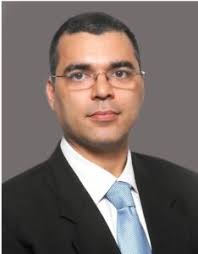
Vijay Shukla “Vijay Shukla is the Managing Partner of Eduvisors, India’s leading education sector focused business consulting and professional services firm. Eduvisors specializes in capacity development, performance improvement and shaping policies in the Indian Education Sector. He is an engineering graduate from IIT-BHU, Varanasi and MBA from XLRI Jamshedpur.”