Recently, I got a chance to hear Mr. M. Damodaran, former SEBI chief in a management convention. During his discourse, he touched upon his turnaround experience at UTI. Although he made a brief mention, my attention was caught by one of his statement that: “Strength of any organization change initiative can be defined by 3Ps- Purpose of change, Passion for change and Pride in change To achieve these 3 Ps, you need a much bigger and powerful “P” i.e. People.
Interestingly, I could relate this with what Mr. Vishal Sikka has been doing at Infosys in his endeavour to bring about a complete change. Mr. Sikka started by establishing a strong communication channel with all Infosysians through various open houses and forums. He wanted to know the ground realities and understand what changes people want to see. His engagement was not restricted to current employees, but also extended to ex-Infosysians in an endeavour to minutely understand and reinvent the legacy at Infosys along with the intention of wooing them back to the company. This was followed by interim increments, promotions, leadership changes, structural changes, etc. across the board. Coming back to the speech, Mr. Damodaran asserted that People are the biggest lever in any turnaround strategy. The processes, policies and technology can be great enablers but they cannot replace the edge which people bring through their intellect and emotions. Great products are created by great people and without great people you may not have great products. In-fact, people come before products and processes in alphabetical order as well.
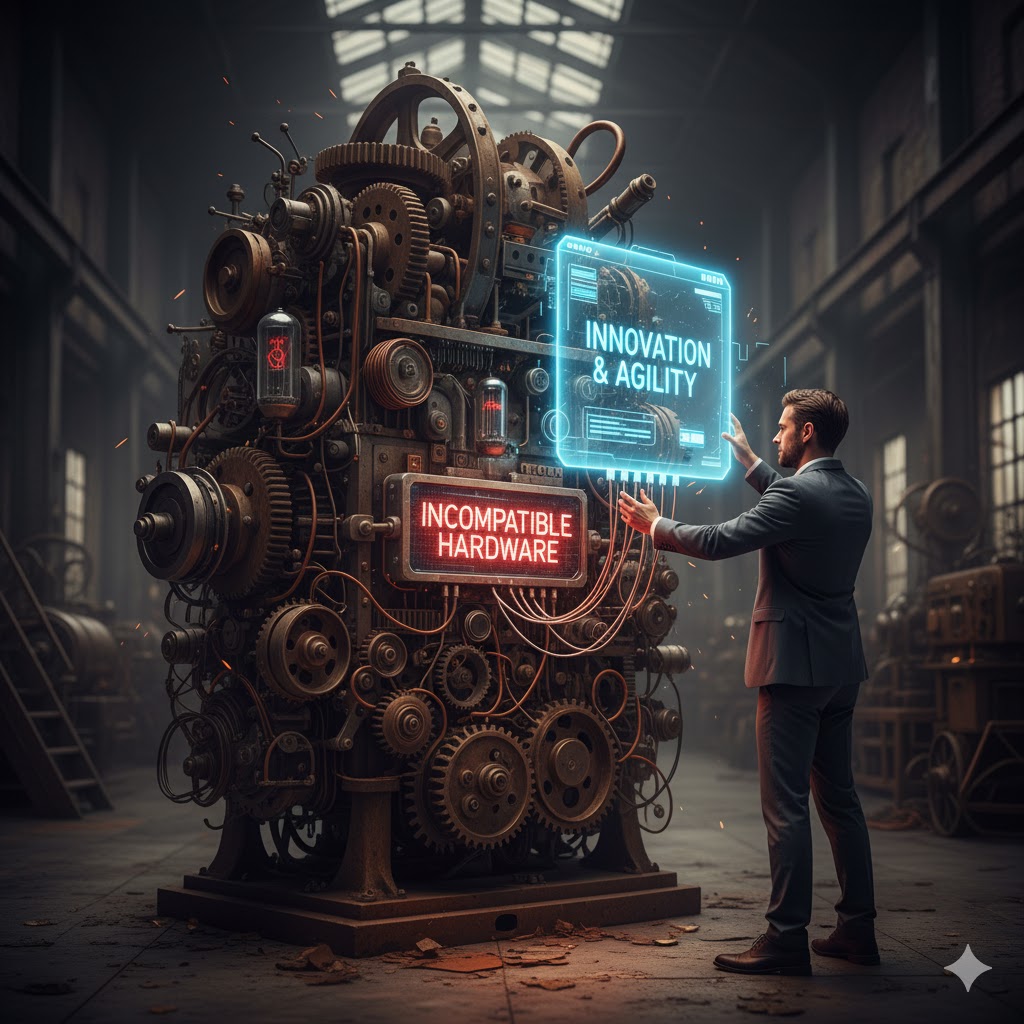
At a broader level, any organization has two parts to it hardware and software. While bringing about an organizational change, leaders often start with replacing or upgrading the software while trying to keep the hardware intact. But what we don’t realise is that the contemporary version of any basic software would also require a compatible hardware base. Even if any change is brought about through software, it may not stick on for long. Hence, it is important to keep the organization hardware updated and attuned to time. Looking at the people-centric change at Infosys which involves high degree of participative management, it may appear to be cost heavy with longer gestation period but it is definitely sustainable and scalable. There have been many historic cases in the business world, where the change lasted with the leader and faded when the leader moved away. In most such cases, there was a windfall gain but short lived! Indeed there are also cases when few world class organizations went through multiple bouts of fleeting changes ending up as a confused entity with a battered hardware.
Infosys has clearly laid out innovation as the driving force for company’s transformation strategy. When we look around, in today’s competitive environment, organizations place lot of thrust on product innovations because of their direct linkage to business revenue as compared to process innovations and people innovation. However, Mr. Sikka’s change mantra seems to be placing a lot of premium on innovation in people space. He seems to be trying to create a strong and stable people base on which the change can ride.
Going back to theory, Lewin’s change management model talks about starting by identifying the levers of change i.e. defining what needs to be changed followed by the interventions required i.e. how these changes are to be carried out and finally deciding the tactical part i.e. when and where these changes are to be made and of course who is to be involved at each step. Hearing what Mr. Damodaran had to say and analyzing what Mr. Vishal Sikka is doing at Infosys, it can be inferred that diagnosis of change levers should start at the people level. People form the foundation of any organization-hardware and unless and until we get that right, any experimentation with organizational software change will tantamount to a Band-Aid solution.
Author Information:
Ankur Poddar “Currently Circle HR Head at Airtel. He is an alumnus of IMT Ghaziabad & NIT Jaipur. He has worked with Bank of America Continuum and Marico Ltd.”