Note on the Author
The author Seepika Singhal is a senior global Total Rewards practitioner with extensive experience in designing and implementing compensation, benefits, and social security frameworks across multi-country organisations. Her work spans wage architecture, variable pay, recognition, benefits harmonisation, and labour law-linked reward transformation, with a strong focus on balancing compliance, cost stewardship, and employee trust. She has led large-scale reward transformations in complex, multi-state and multi-generational workforces, and regularly engages with senior leadership on the practical implications of labour reforms, industrial relations, and workforce sustainability.
Abstract
This article examines India’s new labour codes by moving beyond legislative intent to analyse their practical implications for wage structures, industrial relations, social protection outcomes, and organisational readiness. It argues that while the codes represent significant policy progress in simplifying labour law and expanding formal social security coverage, their success will ultimately depend on implementation capacity—across employers, workers, and the state. The article highlights execution risks, distributional consequences, and industrial relations challenges, and outlines an implementation-oriented perspective to support sustainable compliance and trust-building in the transition to the new labour regime.
Introduction: Reform Long in the Making
In 2019, the Government of India announced one of the most ambitious labour law reforms since Independence—the consolidation of 29 fragmented labour statutes into four comprehensive labour codes governing wages, social security, industrial relations, and occupational safety, health, and working conditions [1]. The stated objective was clear: simplify an overly complex legal framework, reduce compliance burden, enhance formalisation, and expand the reach of social security to a broader segment of the workforce. Among these reforms, the Code on Wages occupies a central position. By redefining wages and standardising principles across minimum wages, payment of wages, bonus, and equal remuneration, the Code fundamentally alters the architecture of compensation and statutory compliance in India.
Yet, while the announcement of the codes appeared sudden, the reform itself was the culmination of nearly two decades of policy debate, expert committee recommendations, and political negotiation. The roots of labour law consolidation can be traced back to the late 1990s and early 2000s, particularly the deliberations of the Second National Commission on Labour, which highlighted the inefficiencies and inconsistencies created by multiple overlapping statutes [2]. Subsequent governments grappled with the challenge of balancing labour protection with economic competitiveness, often postponing reform due to political sensitivity and stakeholder resistance. The eventual enactment of the labour codes thus represented both political resolve and accumulated policy consensus.
However, legislation alone does not constitute reform. The true test lies in implementation—how laws are interpreted, operationalised, and experienced on the ground. This article argues that India’s labour codes mark a decisive shift in policy intent but impose significant practical pressure on employers, workers, and state institutions alike. Understanding this tension is essential to assessing whether the reform delivers durable outcomes or contested compliance.
From Legislative Clarity to Implementation Ambiguity
The initial reception of the labour codes was mixed. Policy reformers and sections of industry welcomed the simplification of laws and the promise of a more predictable regulatory environment. Employers, however, quickly recognised the scale of operational change implied—particularly in wage structuring, payroll systems, employment contracts, and benefit administration.
Yet, following enactment, the absence of notified rules delayed implementation. Between 2019 and 2025, most organisations remained in a prolonged state of anticipation. Employers undertook impact assessments, modelled cost scenarios, and provisioned for potential increases in statutory outgo, but refrained from making structural changes in the absence of enforceable rules. Compliance became a theoretical exercise rather than an operational one.
This period of limbo formally ended on 21 November 2025 with the release of draft rules under the Code on Wages, which largely reaffirmed the original legislative intent without introducing transitional relief or material dilution [3]. For employers, the message was unequivocal: ambiguity had narrowed, discretion had reduced, and implementation could no longer be deferred. The question had shifted decisively from whether to implement to how and at what cost.
Federal Realities and Uneven Execution
India’s federal structure adds another layer of complexity. Labour is a concurrent subject, and while the codes are enacted at the central level, their enforcement depends on state governments notifying rules, building administrative capacity, and ensuring compliance [4]. As states move at varying speeds and adopt different interpretative approaches, the aspiration of a uniform national labour framework risks fragmenting into diverse compliance regimes.
For employers operating across multiple states, this creates renewed uncertainty—different timelines, procedural requirements, and enforcement practices. For workers, particularly those in informal, contractual, and gig arrangements, the benefits of standardisation and expanded coverage remain uneven. Implementation gaps thus threaten to reproduce the very complexity the reform sought to eliminate.
Redefining Wages: Structural Change Without a Transition Path
At the heart of the labour codes lies a fundamental redefinition of wages. The Code on Wages prescribes that basic pay and fixed allowances must constitute a significant proportion of total remuneration, thereby limiting the use of variable and flexible allowances that have historically been used to optimise take-home pay and manage statutory exposure [5].
This structural shift has far-reaching consequences. It directly expands the base for statutory contributions such as provident fund, gratuity, and employee state insurance. However, the codes do not provide explicit guidance on managing the transition from legacy compensation structures to compliant ones. There is no phased implementation, no grandfathering of existing arrangements, and no safe-harbour provisions for employers navigating legacy contracts. The absence of a transition framework signals policy decisiveness, but it also transfers execution risk to employers and employees. Wage restructuring becomes abrupt rather than gradual, heightening financial, operational, and relational stress.
Industrial Relations Implications: Compliance Meets Consent
From an industrial relations perspective, wage restructuring driven by statutory compliance has significant implications. Wages are not merely an economic variable; they are a core element of the psychological and social contract between employers and workers. Changes to take-home pay, even when legally mandated, can trigger dissatisfaction, resistance, and collective action if perceived as unilateral or opaque.
In unionised and semi-unionised sectors, the labour codes may reshape collective bargaining dynamics. As allowances give way to higher basic wages, negotiations may increasingly focus on base pay adequacy, long-term benefits, and social security coverage rather than short-term cash optimisation. While this could strengthen income security over time, the transition period is likely to test trust and negotiation mechanisms [6].
Employers that approach implementation purely as a compliance exercise risk industrial relations strain. Those that integrate consultation, transparent communication, and participatory mechanisms are better positioned to manage workforce response and reduce dispute risk.
Employee Impact: Short-Term Pain, Long-Term Protection
For employees, the most immediate and visible impact of wage restructuring is often a reduction in take-home pay. As a larger portion of wages becomes subject to statutory deductions, employees may perceive a loss, even when total cost to company remains unchanged.
Over the long term, however, higher formal wage recognition strengthens social protection outcomes. Increased provident fund contributions improve retirement adequacy; enhanced gratuity accruals provide more meaningful end-of-service security; and broader insurance coverage under employee state insurance offers protection against health and employment shocks [7].
Yet, social protection is not solely a function of contribution levels. It depends on institutional trust, service quality, and accessibility. Delays in claim settlement, administrative inefficiencies, and weak grievance redressal mechanisms can undermine confidence in the system. Without visible improvements in benefit delivery, employees may question the value of higher deductions, weakening the legitimacy of the reform.
Employer Readiness: Cost, Capability, and Governance
For employers, the labour codes impose immediate cost and capability pressures. The expansion of the statutory wage base increases employer contributions, particularly for organisations that historically relied on allowance-heavy pay structures. Payroll systems must be reconfigured, employment contracts amended, and benefit policies redesigned—often simultaneously.
This is not merely an HR or payroll issue; it is an organisational change challenge requiring coordination across HR, finance, legal, and technology functions. Employers with mature systems, robust governance frameworks, and prior experience with regulatory change are better equipped to absorb the transition. Mid-sized organisations, especially those operating across multiple states, often face the sharpest execution challenges—complex enough to be exposed, yet lacking the scale and infrastructure of larger enterprises.
Over time, the codes may level the playing field by reducing arbitrage and rewarding compliant employers. However, the transition phase is cost-intensive and execution-sensitive, with significant implications for competitiveness and workforce stability.
The State’s Role: Expanding Social Protection, Raising Expectations
For the state, the labour codes represent a shift from fragmented regulation to systemic consolidation. By expanding the contribution base, the codes strengthen the financial sustainability of social security institutions such as the Employees’ Provident Fund Organisation and the Employees’ State Insurance Corporation [8].
However, larger collections also entail greater responsibility. Managing an expanded social security corpus requires enhanced administrative capacity, digital infrastructure, and service delivery standards. The success of the reform will depend not only on compliance rates, but on whether workers experience tangible improvements in protection, portability, and responsiveness. In this sense, the labour codes constitute a governance test. Higher fiscal inflows must translate into visible social outcomes if trust in formalisation is to be sustained.
What Has Changed—and What Has Not
At its core, the Code on Wages changes how wages are defined, not how much employees are paid. By prescribing that basic pay and fixed components must form a significant portion of total remuneration, the Code limits the flexibility employers previously had to design allowance-heavy salary structures.
What has not changed is equally important:
- There is no mandated increase in total compensation.
- There is no prescribed salary structure.
- There is no transition framework for legacy pay models.
This design choice places responsibility squarely on employers to redesign wages in a manner that is compliant, sustainable, and defensible—while managing cost, employee sentiment, and industrial relations. Misreading the Wage Code leads to either over-correction (unnecessary cost escalation) or under-preparedness (compliance and IR risk). Clear distinction between what is mandated and what remains discretionary is essential for credible implementation.
What the Wage Code Does—and Does Not—Mandate
| The Wage Code Does Not Mandate | The Wage Code Mandates |
| Any increase in total cost to company (CTC) | A uniform definition of wages for statutory compliance |
| A single prescribed salary structure for all organisations | Inclusion of basic pay and fixed components within the wage construct |
| Automatic reduction in employee take-home pay | Timely payment of wages, including final wage dues within stipulated timelines |
| Completion of the entire Full & Final (F&F) settlement within two days | Expanded applicability and coverage of wage-related protections |
| Elimination of employer discretion in reward philosophy or pay strategy | Stronger enforcement through streamlined inspection and penalty mechanisms |
Common Myths and Realities of the Wage Code
As implementation discussions intensify, several misconceptions continue to circulate in organisations. Clarifying these is essential to avoid poor decisions and unnecessary anxiety.
Myth 1: The Wage Code mandates a salary hike Reality: The Code does not require employers to increase total CTC. It requires a rebalancing of components. Cost increases arise only if employers choose to protect take-home pay or absorb higher statutory contributions.
Myth 2: Take-home pay must reduce Reality: Take-home pay may reduce if restructuring is done on a cost-neutral basis. Employers can partially or fully absorb the impact, depending on affordability and talent strategy.
Myth 3: This is just a payroll change Reality: Payroll is the last mile. The real work lies in:+1
- wage architecture redesign,
- employment contract amendments,
- IR consultation (where applicable),
- systems integration,
- and employee communication.
Myth 4: One structure will work for everyone Reality: Organisations may need segmented approaches—different treatment for frontline roles, critical talent, leadership, or unionised populations—while remaining compliant.
Myth 5: Compliance ends once payroll is updated Reality: True compliance is audit-proof, regulator-ready, and employee-understood. Payroll accuracy without documentation, governance, and communication is fragile compliance.
Industrial Relations: The Silent Multiplier
Wage restructuring under the Code has direct implications for industrial relations. In unionised or semi-unionised environments, changes to basic wages, allowances, and take-home pay can reopen wage negotiations—even when driven by statutory requirements. Practically, this means:
- Employers must distinguish statutory compulsion from managerial discretion in negotiations. Transparent communication becomes critical to avoid misinterpretation.
- Existing settlements and long-term agreements may require careful legal and relational handling.
Handled poorly, compliance-driven restructuring can trigger disputes. Handled well, it can reset wage conversations around stability, predictability, and long-term security.
Social Protection: From Deduction to Value
For employees, the immediate experience of the Code is often reduced take-home pay. The long-term promise lies in improved social protection—higher provident fund balances, stronger gratuity outcomes, and broader insurance coverage. However, from a practitioner’s lens, contributions alone do not equal protection. Trust in social security institutions depends on:
- ease of access,
- portability,
- speed of claims,
- and quality of service.
If benefit delivery does not visibly improve, employees may view higher deductions as loss rather than protection. Employers therefore play an indirect but important role in educating employees on long-term value while advocating for better institutional outcomes.
From Compliance to Capability: An Implementation-Oriented Perspective
If the destination set by the labour codes is non-negotiable, the path to reach it remains contested. Organisations that rely on hurried payroll fixes or cosmetic restructuring may achieve nominal compliance, but such approaches are unlikely to withstand regulatory scrutiny or workforce reaction.+1
Effective implementation requires a structured approach—one that aligns wage redesign with systems integration, governance strengthening, industrial relations management, and employee communication. Employers must treat labour code implementation as a phased organisational change process rather than a one-time compliance event.
When Will the Wage Code Be Implemented?
As of now:
- The Code on Wages is enacted.
- Draft rules were released on 21 November 2025.
- Final implementation will occur once states notify their respective rules.
There is no single national implementation date. Employers should expect:
- phased state-wise notifications,
- limited lead time between notification and enforcement,
- increased scrutiny once rules are notified.
From a risk perspective, waiting for the “perfect date” is no longer prudent. The direction of travel is clear.
Timing the Transition: Aligning Wage Code Implementation with Merit Cycles
India’s labour codes are no longer a policy concept under discussion—they are an operational reality approaching enforcement. The consolidation of 29 labour laws into four codes was intended to simplify compliance, improve wage transparency, and strengthen social protection. Yet, for employers and workers alike, the real impact of the reform is being felt not in legislative text, but in payroll simulations, employee conversations, and industrial relations strategy.
Between 2019 and 2025, many organisations treated the Code on Wages as a future risk rather than a present obligation. This was partly rational. While the law was enacted, the absence of notified rules allowed employers to model financial impact without making irreversible structural changes. That pause effectively ended with the release of the draft rules in November 2025, which reaffirmed the government’s original intent without offering transition relief or dilution. For practitioners, this marked a decisive shift from theoretical compliance to operational readiness.
In practice, many employers are now exploring alignment of wage restructuring with annual merit cycles, allowing the impact on take-home pay to be partially absorbed through merit increase budgets rather than felt as a sharp standalone correction. While this approach offers practical cushioning, it introduces its own complexities. Questions arise around employees who are not eligible for merit increases, organisations that operate multiple merit cycles within a year, and the feasibility of phased implementation without creating parallel wage structures. Managing multiple structures within a single payroll and HR system—while ensuring audit defensibility and equity—becomes a significant operational challenge until full harmonisation is achieved.
These trade-offs underline a critical reality : while timing wage code implementation alongside merit cycles may be pragmatic, it requires careful design, governance, and clear sunset paths to avoid prolonged structural fragmentation.
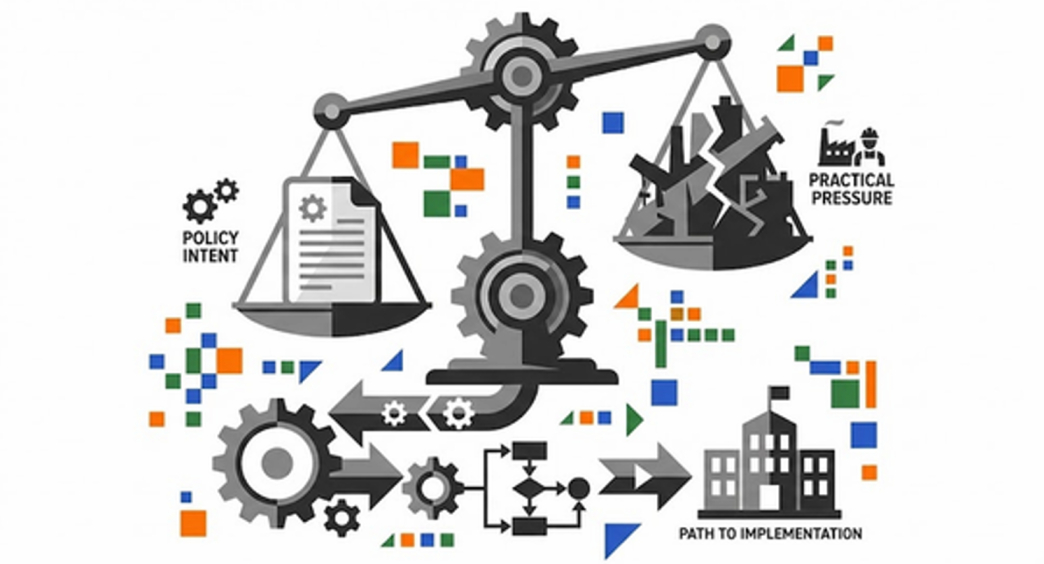
Conclusion: Policy Progress or Practical Pressure?
India’s new labour codes represent genuine policy progress. They simplify a fragmented legal landscape, expand the scope of social protection, and signal a commitment to formalisation and long-term workforce security. Yet, policy ambition alone does not guarantee outcomes. Implementation is where reform is tested—and contested.
For employees, the codes promise long-term protection but demand short-term adjustment. For employers, they replace flexibility with discipline and bring industrial relations considerations back to the centre of wage strategy. For the state, they expand fiscal capacity while raising expectations of governance and service delivery.
The labour codes are therefore both progress and pressure. The difference lies not in the law itself, but in execution—by employers, by institutions, and by the state. Leadership, capability, and trust will ultimately determine whether this reform delivers sustainable protection or contested compliance.
References
- Ministry of Labour and Employment, Government of India. Labour Codes on Wages, Industrial Relations, Social Security and Occupational Safety, Health and Working Conditions, 2019-2020.
- Second National Commission on Labour. Report of the National Commission on Labour, Government of India, 2002.
- Ministry of Labour and Employment, Government of India. Draft Rules under the Code on Wages, Notification dated 21 November 2025.
- Constitution of India, Seventh Schedule-Concurrent List.
- Code on Wages, 2019. Government of India.
- International Labour Organization. Collective Bargaining and Wage Setting in a Changing World of Work, ILO, 2021.
- Employees’ Provident Funds and Miscellaneous Provisions Act, 1952; Employees’ State Insurance Act, 1948.
- NITI Aayog. India’s Social Security Architecture: Challenges and Opportunities, 2022.
The views expressed in this article are those of the author, informed by practitioner experience and prevailing market perspectives, and do not necessarily reflect the views of any organisation, institution, or employer with which the author is associated. The article is intended to contribute to academic and practitioner discourse and should not be construed as legal advice. Artificial intelligence-based tools were used for language refinement and editorial clarity; all analysis, interpretations, and conclusions remain the author’s own.
About the Author

Seepika Singhal is a senior global Total Rewards practitioner with extensive experience in
designing and implementing compensation, benefits, and social security frameworks across
multi-country organisations. Her work spans wage architecture, variable pay, recognition,
benefits harmonisation, and labour law-linked reward transformation, with a strong focus on
balancing compliance, cost stewardship, and employee trust. She has led large-scale reward
transformations in complex, multi-state and multi-generational workforces, and regularly
engages with senior leadership on the practical implications of labour reforms, industrial
relations, and workforce sustainability