
When I was asked to write for this magazine this year, one of the topics suggested to me by the editorial team was to write about my view of “Performance Appraisals – The Way Forward”. My first response was one of recoil. At its very best, the idea of performance appraisals is an outdated approach to assessing an individual’s performance by their manager, and at its worst, it is hindering business performance and costing organizations valuable, passionate talent as they struggle to shed this necessary evil. As I thought about it, though, I realized, the terminology is possibly the least of our problems. It is only an indicator of a deeper thought process that underlies a very prevalent method of executing a critical organizational function.
Most of us in the corporate world, whether from HR or any other part of the business, would be familiar with how the performance appraisal or performance management (surprisingly, many of us still use the two words synonymously) cycle works. Goal setting, self-assessment, manager assessment, performance rating, feedback discussion; generally once a year and if you are lucky, twice – mid-year and year-end. There are several concerns with this model of performance management, key amongst which I am highlighting here:
- It is an HR process, rather than an organizational approach to managing performance
- It is too infrequent – annual or twice a year
- It does not manage performance proactively instead it assesses performance reactively
- The focus is on the performance rating that feeds into compensation, rather than on performance feedback
- It is rigid and depends heavily on what the performance management tool can and cannot do
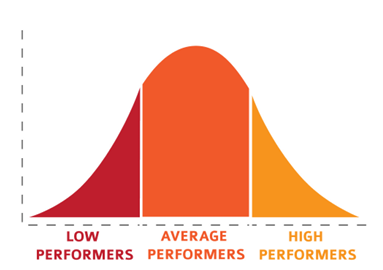
That performance management as it stands today is ineffective has been widely discussed and established. These and other concerns have prompted several well-known organizations to ditch the annual performance management process and the related bell curve over the recent years. Most notable are Google, Amazon, Netflix, Microsoft, Accenture, Adobe and GE. Employee feedback apps such as Impraise and Workday are on the rise. At last known count, about 30 different global organizations were working on changing their performance management processes.
While this is a great sign, and we should all be rejoicing, the risk is in the industry succumbing to another performance management fad, like the bell curve and 360 degree appraisals before this. Performance is the heart of any organization; for every fad, the organization culture and business performance pay a hefty price. It is the responsibility of the HR function to work closely with the CEO and the leadership team to create a performance management solution that works for the organization. There is no one-size-fits-all. It is about building your culture of high performance that enables individual, team and organizational performance. Not about implementing a best practice performance management solution.
Five key parameters to consider when designing or redesigning performance management, or building a high performance culture in an organization are: the nature of business, the meaning of performance, the talent pool, change readiness in the organization and the focus on manager development.
NATURE OF BUSINESS: One of the key things to consider when joining the performance management redesign movement is your business environment. What’s the nature of the business? How dynamic or regulated is it? Do people’s goals change frequently? Are people required to take several independent, on-the-spot decisions or is it more important to follow protocol and a chain of command for the business to truly succeed? Understanding these aspects of business will provide the foundations on which to design a performance management framework.
MEANING OF PERFORMANCE: This is perhaps the most critical, yet the most underrated question. Once I was discussing with managers at a client organization, how they review and rate performance. One of them said, “For me, it’s about people who take up stretch assignments. I had one of my team members I recently promoted. For the last six months, he has stayed up late every night, working 14 to 16 hours a day sometimes, working on a critical project.” Another manager quipped, “Oh well, it’s not just about staying late. My team members have had to work weekends, sacrificing time with their families because of last minute fires that kept coming up in our last project. What about that?” Then a third voice joined, “It’s not about weekdays or weekends. At the end of the day, it’s about how much work you get done. Nothing matters more than that.” And there was, “What about being a team player?” and “What about being a good manager?” and so much more. What is disconcerting is a confusion such as this is not uncommon in many companies. Often, defining performance, let along high performance, in the organization receives only some or no consideration. It is expected to be “understood” by all. Not true. What does performance mean to your organization? Is it completing everyday work tasks, being a good team player, grooming the next level leaders, championing process improvements? Discussing what performance is and what must and must not be considered when managing an individual’s performance will clarify to everyone what performance means and ensure a consistent interpretation.
TALENT PROFILE: What kind of people do you have? Is the organization primarily one of thinkers or doers? Or makers or takers? In the lifecycle of your business, is the focus on innovation or execution for the next, say, five years? What will work for your current talent profile? What is your ideal talent profile and what would work for them? How soon do you plan to move from the people you have to the people you need? At the end of the day, it is these people that the performance management approach is going to manage. If it doesn’t work for them, it is not going to work for your organization. Put the talent profile and nature of business together and you will see why there is no one right way to manage performance. How performance management needs to work at an industry-disrupting ecommerce startup that has predominantly purpose-driven, meaning-searching millennials might be very different from how performance management needs to work at a highly regulated pharma manufacturer that largely employs loyal, job security driven Gen Xs. Sometimes you can need different performance management approaches for different groups of people your critical high performers, your new hires and everyone else, for example.
CHANGE READINESS: When thinking of revamping performance management, one cannot discount the importance of assessing the level of change readiness in the organization. Will the changes being proposed conflict with your organizational culture? Are your people across levels, especially your leadership ready for a change? How many aspects of the current system will change? Must the change be introduced in phases over time? What support will the new approach to sustain and become part of the company’s DNA? A change that too sudden, brought upon a resistant people and in a challenging environment is doomed even before it begins.
FOCUS ON MANAGER DEVELOPMENT: Perhaps the most important aspect of having a high performance culture is having managers that know how to manage people and performance. Most managers today get promoted to manager roles for being great individual contributors. Great developers become team leads and then project managers, for example. And their performance is still assessed on the basis of how they deliver on their goals. Current manager-assessment-driven performance management does not assess managers on how good they are as managers. This makes being a good manager and learning the skills to be a good manager, a nice-to-have rather than a must-have. A situation such as this is disastrous for effective performance management. The key responsibility of managers must be to manage their teams; coach them to deliver high performance; ensure regular, ongoing touchpoints and feed forward as much as they feedback. They must ensure they are managing performance, not just assessing it. So ensure that you make manager development a key part of your performance management strategy. As Professor Jason Wingard of Columbia, author of Learning to Succeed: Rethinking Corporate Education in a World of Unrelenting Change, said in an article last year in Fortune magazine, “Managers who operate in an environment that integrates learning develop a potent ability to influence, communicate and drive performance for subordinates and peers”
Performance management does not operate in isolation. When looking at it through an organization development lens, as a high performance culture, it is about an integrated strategy that has links with learning, talent development, compensation and most importantly, business performance. You need to decide how loose or strong you need these ties to be in your organization.
In this article, I have shared some key parameters to consider when redesigning performance management for the future. As you think about what would work for your organization, you may come up with some other considerations that are relevant to you. Include those, get started and have fun. Because if you are not having fun designing something, chances are no one is going to have fun living it!
Author Information:

Radhika Subramanian is a TISS alumnus (batch of 2005-07) and is the Founding Partner of Glow Worm Consulting, an experiential learning and OD consulting firm. She is also the co-founder of tech startup, Wukilabs Technologies. Radhika publishes regularly on Linkedin and her blog, radhikasubramanian.com. Twitter handle @justradhika