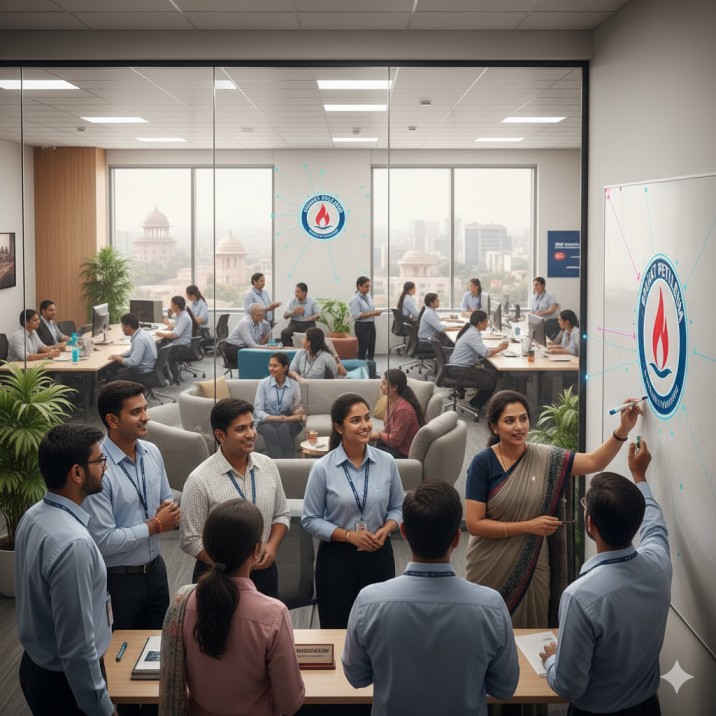
Every successful organizational undertaken by Bharat transformation has one critical ingredient: people. While strategies, technologies, and processes form the foundation, it is people who bring them to life, transforming ideas into reality. People are the heartbeat of every successful organizational transformation. When empowered, employees become champions of change, bringing creativity, resilience, and energy to navigate challenges. Leaders who invest in trust, transparency, and collaboration inspire their teams to step out of their comfort zones and embrace change with confidence. Transformation succeeds when every individual feels connected to a larger vision, understands their role in it, and is motivated to contribute their unique skills.
Moreover, people act as the bridge between transformational initiatives and outcomes. By valuing and engaging employees, organizations create a ripple effect of commitment and accountability that accelerates progress. Organizations that prioritize their people as their greatest asset not only achieve change but also sustain it, ensuring long-term growth and impact.
To illustrate this, I recount a major organizational restructuring journey In this context, Mr. U. Sundararajan, then Chairman & Managing Director of BPCL, Petroleum Corporation Limited (BPCL) in the late 1990s. As a core team member deeply involved in this initiative, I had the privilege of contributing to this transformative change. Drawing from my personal experiences, I share insights that offer a first-hand perspective on navigating and driving impactful organizational transformations with a strong emphasis on people.
BPCL Profile
Bharat Petroleum Corporation Limited (BPCL) is a Fortune 500 public sector enterprise in India, renowned for its leadership in petroleum refining and the nationwide marketing of a diverse range of products. Backed by a robust and extensive infrastructure, BPCL ensures seamless connectivity and reliable service to customers across the country. The company proudly reports an annual turnover of US$60 billion, market sales of 51 million metric tons, and is driven by a dedicated workforce of around 8,500 employees.
Key Business Driver Behind The Change
The early 1990s marked the beginning of economic deregulation in India, with the opening up of various sectors, including Oil. was entrusted by the Government of India to lead a study group tasked with defining a roadmap for the deregulation of the Oil Sector. The group’s findings, detailed in the “Hydrocarbon Perspective 2010” report, set the framework for the Oil Industry’s transition to a deregulated environment, scheduled to take effect from April 1, 2002, in a phased manner.
Under Mr. Sundararajan’s leadership, BPCL responded to this evolving and increasingly competitive landscape by adopting a strategy centered on building a strong customer-focused culture throughout the organization. Recognizing that success in a deregulated market would depend on the agility and responsiveness of its workforce, BPCL redefined its key performance metrics to prioritize customer loyalty and profit per customer. This shift in strategic focus was strengthened by a significant organizational restructuring initiative during 1997-98.
The Challenges of Transformation
The transformational initiative at BPCL required a comprehensive organizational realignment to effectively address customer needs. It also necessitated the development of new skills and competencies while fostering a culture of continuous learning and adaptability among employees. However, the transformation brought with it key challenges and pressing questions like:
How do we restructure an organization originally designed for administering the distribution of petroleum products into one that is truly customer-driven? How do we drive change among 12,000 employees, transitioning them from operating within a hierarchical, command-and-control, bureaucratic structure to embracing a new organizational culture centered on empowerment, collaboration, and team learning? How do we build leadership competencies among front-line leaders who have had limited prior experience in leading teams? How do we shift mindsets from a comfort zone of working in a protective, controlled environment to becoming more market-driven, customer-focused, and agile?
These challenges prompted the launch of Project CUSECS an acronym for Customer Service & Customer Satisfaction. To spearhead the project, BPCL established a dedicated core team comprising domain experts from various business units. The initiative was guided by Arthur D. Little, a prominent US-based consulting firm.
“Repairing a Plane While It’s in Flight”
The organizational restructuring at BPCL was aptly described as “repairing a plane while it’s in flight.” The challenge was monumental as BPCL had to ensure uninterrupted operations impacting millions of customers and business partners across the country, while simultaneously executing a seamless transition into the new organizational framework. After gaining valuable insights from the consultants and studying similar restructuring initiatives undertaken globally, BPCL recognized that the key to success lay in prioritizing the people aspect of change.
Creating a “Pull” for Change
As Peter Drucker famously said, “Culture eats strategy for breakfast.” During BPCL’s transformation, pockets of resistance to change emerged within the organization, driven by fears of losing power, uncertainty about the future, and difficulties in adapting to the new reality. These concerns manifested in various forms, including criticism of the proposed changes, reluctance to engage in related programs, withholding resources, focusing on constraints rather than solutions, and a failure to honor commitments.
BPCL recognized that when people are “pushed” toward change, they often enter a state of “compliance” driven by extrinsic force. This “compliance” can range from “genuine” to “formal” or even “grudging”, with varying levels of commitment and effectiveness. In contrast, creating a “pull” for change engages individuals intrinsically, aligning them with the organization’s vision and motivating them to contribute positively. As a result, the organization adopted a strategic approach focused on fostering a “pull” for change encouraging voluntary engagement and ownership rather than relying on a top-down “push.” From the very beginning, BPCL anchored its efforts in this authentic “pull” strategy, which became the cornerstone of its operating model throughout the restructuring journey.

Envisioning A New Future
The organizational restructuring initiative began with senior leadership collaboratively crafting a compelling shared vision and defining a core set of values for BPCL. This vision was systematically communicated across the organization through workshops, fostering alignment and engagement at all levels. The shared vision served as a catalyst for action, while the core values provided a guiding framework, positioning BPCL as a change-ready organization.
Understanding The Current Reality
The next critical step was to conduct an honest assessment and open appraisal of BPCL’s current reality. This was achieved through formal workshops that included employees across all levels, age groups, job roles, and genders across the organization. The insights from these workshops were eye-opening, highlighting the gap between BPCL’s desired future state and its existing position.
Managing “Creative Tension”
The gap between the shared vision and current reality, referred to as “creative tension,” served as a powerful motivator for BPCL’s leadership to take decisive action toward designing a new, agile, and customer-focused organizational structure.

Fostering Ownership Across Stakeholders
The key to fostering stakeholder ownership of the intended organizational change lay in actively “involving”, “enrolling”, and “engaging” them throughout the entire restructuring journey. BPCL emphasized active engagement across all organizational levels during the restructuring effort, beginning with the formation of an 11-member Steering Committee composed of business heads. This committee was tasked with overseeing and managing the project, providing critical resources, strategic guidance, and decision-making support to drive the initiative’s success. For matters with organization-wide impact, functional directors and the Chairman participated in Steering Committee discussions. This collaborative approach enabled prompt decision-making, avoided delays, and ensured the project’s uninterrupted progress.
To enhance organizational engagement, senior leaders traveled extensively to connect with employees across various locations, sharing key decisions, addressing anticipated changes, and resolving concerns. These interactions not only uplifted morale but also built trust in the initiative. Furthermore, regular communication channels, such as newsletters and intranet updates, kept employees well-informed about the project’s progress, ensuring transparency and fostering alignment.
Additionally, Subject Matter Experts from various business units were enlisted to participate in Task Forces. These groups gathered data, evaluated options, and presented recommendations on specific organizational matters, ensuring that employees had a voice in shaping the restructuring process.
Acknowledging unions as key stakeholders, BPCL fostered transparent engagement by sharing project updates, discussing potential impacts, and aligning actions with decisions, thereby earning their trust and support. This open communication and trust-driven approach ensured alignment and sustained momentum, facilitating the smooth implementation of changes related to roles, relocations, and skill development.

Through these thoughtful and carefully designed efforts, BPCL fostered an environment where employees felt personally invested in the transformation. Instead of being passive recipients of change, they became active participants in shaping the company’s future.
Building Positive Energy in the Project Team
The success of Project CUSECS also hinged on the motivation and cohesion of the core project team. BPCL achieved this through several key strategies.
Vision Alignment: The team co-created a compelling vision for the project, fostering alignment and unity. To enhance collaboration, the team developed operating principles that guided behavior and attitudes, ensuring shared commitment to achieving larger goals. Empowerment: Project team members were given operational autonomy and a common designation “Team Member Project CUSECS” emphasizing skills over hierarchy. Leadership Support: Mr. Sundararajan, the Chairman & Managing Director, was deeply committed to the project from the very beginning, dedicating his time and providing unwavering support to ensure its success. Senior leaders of BPCL regularly visited the project office to engage with the team, review progress, and address any challenges. These interactions not only boosted team morale but also fostered a strong sense of connection and accountability throughout the project. Skill Development: The project team was equipped with learning opportunities and exposure to international best practices, through workshops, seminars, and industry interactions.
Managing Change Through Internal Coaching
BPCL established a dedicated pool of internal coaches, meticulously chosen from diverse business units, to drive transformational change and ensure a seamless transition to the new organizational structure. These coaches underwent a comprehensive training and certification process, enabling them to effectively lead high-impact programs such as Foundations of Organizational Learning (FOL), Visionary Leadership Planning (VLP), and other change interventions, thereby laying the groundwork for transformation.
• Foundations of Organizational Learning (FOL): The ‘Foundations of Organizational Learning program, attended by over 4,000 employees, empowered individuals to recognize the need for change, align personal goals with organizational objectives, overcome mental barriers, and take ownership of their personal growth. • Visionary Leadership & Planning (VLP): Rooted in Peter Senge’s “Learning Organization” framework, the ‘Visionary Leadership & Planning’ program empowered teams to align around shared goals and deliver exceptional results. Over the course of two years, more than 200 workshops were conducted, fostering alignment, clarity, and commitment among employees, thereby sowing the seeds of transformation. • Performance Coaching: BPCL recognized that leadership at all levels is pivotal to sustaining organizational change. To foster a new leadership culture, the organization harnessed the expertise of its coaches through Performance Coaching and Leadership Programs. These initiatives focused on aligning leaders’ personal aspirations with their roles and existing mental models while exploring new leadership approaches and cultivating a culture of accountability.
Results of the Transformation
After two years of dedicated effort and unwavering leadership support, BPCL underwent a remarkable transformation, evolving into a customer-centric organization. The new structure was streamlined, lean, agile, and highly attuned to customer needs, external shifts, and competitive dynamics, facilitating quicker and more effective decision-making. The transition from a function-based structure to a process-driven organization was characterized by:
Customer-Centric Operations: Self-managed teams became the foundation of BPCL’s operations, driving agility, innovation, and responsiveness to market dynamics. Collaborative Culture: A culture of openness and collaboration flourished, fostering greater ownership and accountability among employees. Leadership at All Levels: Employees embraced leadership roles beyond their traditional boundaries, unlocking their potential and delivering exceptional results. Sustained Growth: The transformation positioned BPCL to thrive in a dynamic business environment, ensuring long-term growth and impact.
In addition to redesigning the organizational structure, BPCL developed a comprehensive Change Plan, featuring a strategic roadmap to compete in a deregulated environment. Key initiatives included launching customer loyalty programs, enhancing retail outlets to meet international standards, and redefining the IT landscape through ERP implementation. Field-level business teams were given greater financial and decision-making authority, enabling quicker responses to customer needs. This structural change, combined with a cultural shift and transformed mindset among employees, led to a paradigm shift in customer engagement and service. As a result, BPCL achieved record-breaking sales volumes, outperforming industry peers across all performance metrics.
The transformation also fostered a culture of openness and collaboration, driving ownership and impactful initiatives. Employees embraced expanded roles, unlocking their potential for exceptional results. Customer service standards soared, innovation flourished, and leadership emerged at every level, propelling sustained growth and innovation.
BPCL’s transformation has positioned it to thrive in an ever-changing business landscape, unlocking the full potential of its people and paving the way for enduring excellence. This success can be attributed to the unwavering support of top management, active stakeholder involvement, and effective change management with a strong focus on people and adaptation.
Lessons from BPCL’s Transformation
BPCL’s story offers valuable insights into the key factors that drive successful organizational transformation:
People-centric approach: Emphasizing the human element of change by cultivating trust, transparency, and collaboration. Intrinsic Motivation: Creating a compelling “pull” for change by engaging employees and encouraging voluntary ownership. Capability Building: Investing in leadership development and skill-building to ensure the sustainability of transformation. Transparent Communication: Promoting open, consistent communication to build trust and confidence across the organization. Leadership Commitment: Demonstrating unwavering commitment from top management to inspire and guide the transformation process.
In conclusion, BPCL’s transformation journey underscores a fundamental truth: people are the cornerstone of every successful organizational change.

Author: G. Kalaiselvan
About the Author
G. Kalaiselvan is a seasoned corporate professional with 34 years at BPCL in leadership roles across multiple functions. After retiring, he became a Management Consultant and Executive Coach, guiding organizations through transformative growth.
With 14 years of expertise in ERP implementation and optimization, he has led organizational change across industries in India and globally. He has facilitated 600+ strategic interventions and leadership programs for Fortune 500 companies.
Mr. Kalaiselvan also teaches leadership and management as a visiting faculty at top Mumbai institutions, including SPJIMR, TISS, KJ Somaiya, and St. Xavier’s Institute of Management.